Ten years ago, Pune was known as the “Oxford of the East” and a growing IT hub. Today, it’s something bigger, a sprawling, multi-nodal urban region where ring roads, metro corridors, and satellite townships are redrawing the map faster than most residents can keep up with. If you’ve searched flats for sale in Pune recently, you’ve probably noticed listings creeping further from the old city limits and closer to newly connected suburbs. That’s not a coincidence, it’s the direct result of one of India’s most ambitious urban expansion stories, and it’s opening doors for homebuyers who know where to look.
Why Is Pune’s Infrastructure Growth a Game-Changer for Buyers?
Pune’s transformation is being engineered, quite literally, by planned Pune infrastructure development. The Pune Metropolitan Region Development Authority (PMRDA) oversees a planning area of roughly 7,256 sq. km, one of the largest metropolitan planning jurisdictions in India. This scale of Pune infrastructure planning means roads, water supply, and public transit are being built ahead of demand, rather than playing catch-up after an area is already congested.
One Project Stands Out
- The Pune Metro expansion, which covers over 30 km across two operational corridors, with further extensions planned toward Hinjawadi and Nigdi.
For buyers, this matters enormously. Localities that were once considered “too far” are now within a comfortable commute, and property appreciation tends to follow infrastructure, often ahead of the completion date, not after it.
Who’s Building Pune’s Next Chapter?
None of this growth happens without capable execution on the ground. Pune has a dense, competitive base of real estate developers in Pune, ranging from decades-old legacy names to newer, fast-scaling players. This competition is generally good news for buyers, it pushes quality, transparency, and RERA compliance upward, since developers know discerning buyers now compare registered project details before signing anything.
Where Are the New Opportunities? Emerging Micro-Markets to Watch
As infrastructure pushes outward, so does buyer interest, and price advantage. Two corridors worth watching closely:
Pimpri Chinchwad: An established industrial and IT-adjacent belt, continues to see steady residential demand. Buyers searching for flats in Pimpri Chinchwad are typically drawn by its mature social infrastructure, hospitals, schools, and retail, combined with strong connectivity to the IT corridors of Hinjawadi and the upcoming metro line.
Moshi: Just north of Pimpri Chinchwad along the Spine Road corridor, is an earlier-stage opportunity. It’s an area many buyers are only beginning to discover, which is precisely why it’s worth flagging: those exploring 3 BHK flats in Spine Road Moshi are essentially buying into a locality before its infrastructure dividend has fully priced in. Spine Road’s planned widening and its proximity to the Pune-Nashik highway make it a corridor to track over the next 3–5 years.
What’s Happening to Flat Prices in Pune?
Naturally, all this development activity feeds into pricing. Flat price trends in Pune have moved steadily upward over the past few years, though the pace varies sharply by locality and how close it sits to a completed infrastructure link.
| Locality | Approximate Price Range (per sq. ft.)* | Growth Driver |
|---|
| Pimpri Chinchwad | ₹6,500 – ₹9,500 | Established connectivity, metro proximity |
| Moshi / Spine Road | ₹5,000 – ₹7,000 | Ring road access, early-stage growth |
| Hinjawadi | ₹7,500 – ₹11,000 | IT corridor demand |
| Wakad / Baner | ₹9,000 – ₹13,000 | Mature IT-residential belt |
The broader takeaway: localities still in the “developing” phase of infrastructure tend to offer a meaningfully lower entry point than already-mature markets, a gap that historically closes as connectivity improves.
Is It Just About Homes? The Commercial Angle
Urban growth doesn’t only create residential opportunity. As new residential clusters rise, so does demand for local retail, offices, and warehousing. Buyers looking to buy commercial property in Pune are increasingly eyeing the same growth corridors, ring road frontage and metro-adjacent plots in particular, betting that footfall will follow rooftops. Commercial assets in emerging nodes often carry higher rental yield potential precisely because supply hasn’t yet caught up with residential expansion.
Which Configuration Makes Sense for You?
Configuration choice matters as much as location. Buyers who want to buy a flat in Pune 2 BHK are typically optimising for affordability and rental liquidity, 2 BHKs remain the most actively traded configuration in Pune’s mid-income segment, especially near IT hubs. Larger families or long-term end-users, on the other hand, often lean toward 3 BHK units in growth corridors like Moshi, prioritising future space needs over immediate cost savings.
How Should You Approach Buying a House in Pune Right Now?
If you’re planning to buy a house in Pune, timing your entry around infrastructure milestones — rather than waiting for a locality to be “fully developed” — is generally where the strongest value lies. Practically, that means:
- Track PMRDA and MSRDC project timelines for the corridor you’re considering.
- Compare price trends across 2–3 similar localities before committing.
- Verify RERA registration and developer track record for any shortlisted project.
- Decide your configuration based on end-use, not just budget.
Final Thoughts
Pune isn’t just growing outward, it’s growing intentionally, with roads, metro lines, and planning frameworks arriving in step with rising demand. That combination is rare, and it’s precisely why the current window offers real opportunity for buyers willing to look slightly ahead of the curve rather than behind it.
If you’re evaluating where to put down roots in this expanding city, working with a developer that understands the region’s long-term trajectory makes the decision considerably easier. Pharande Spaces, a name long associated with township development in the PCMC belt, has built its reputation on exactly this kind of forward-looking planning, combining RERA-compliant transparency with master-planned communities designed around the very infrastructure corridors discussed above. Whether you’re exploring your first 2 BHK or a larger family home along an emerging growth corridor, aligning with a developer who’s already anticipated where Pune is headed is one of the smartest moves you can make.

 By Admin |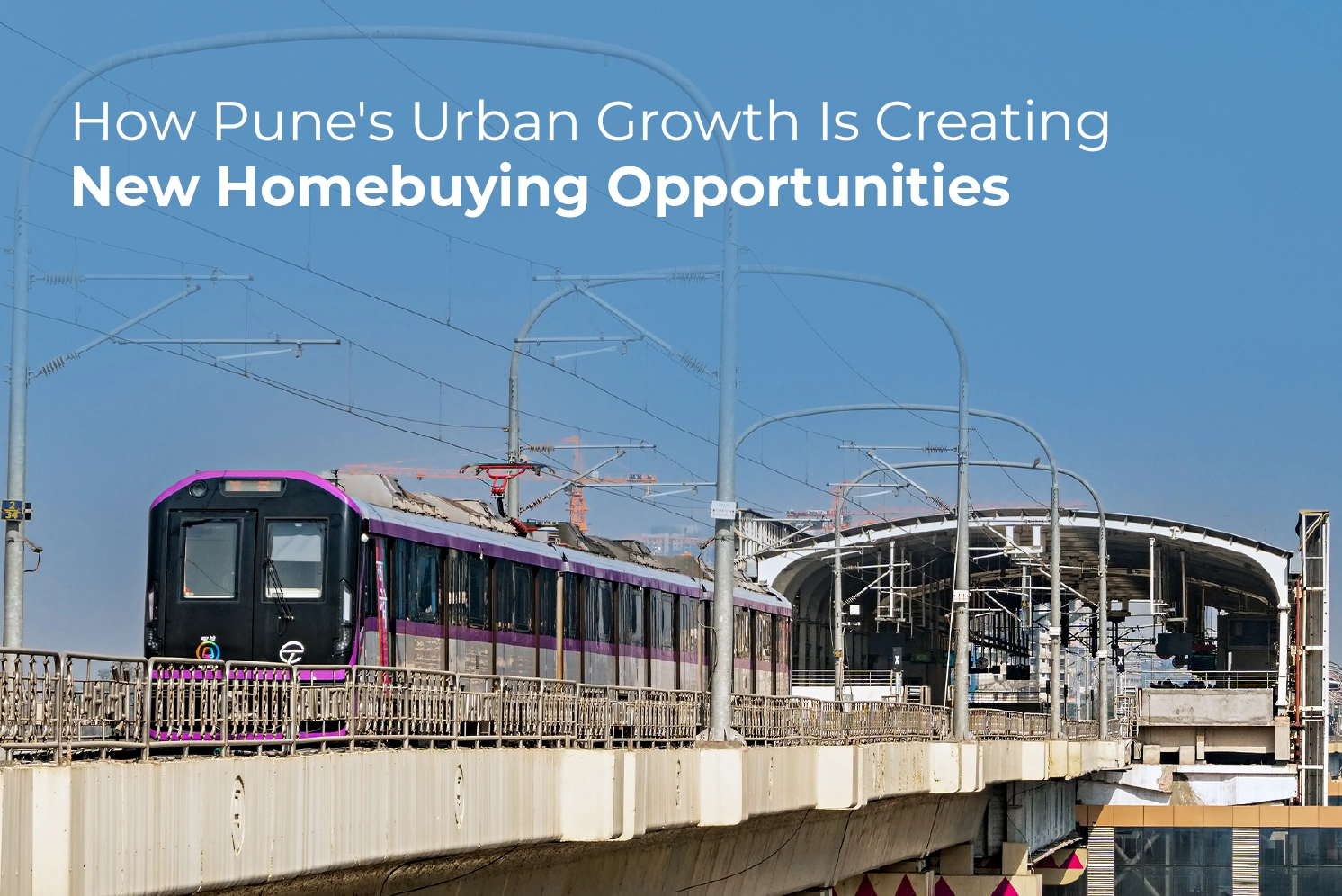
 By Admin