The RERA carpet area is very close to the usable area because it represents the net usable internal apartment space, excluding balconies, terraces, and external walls.

 By Admin |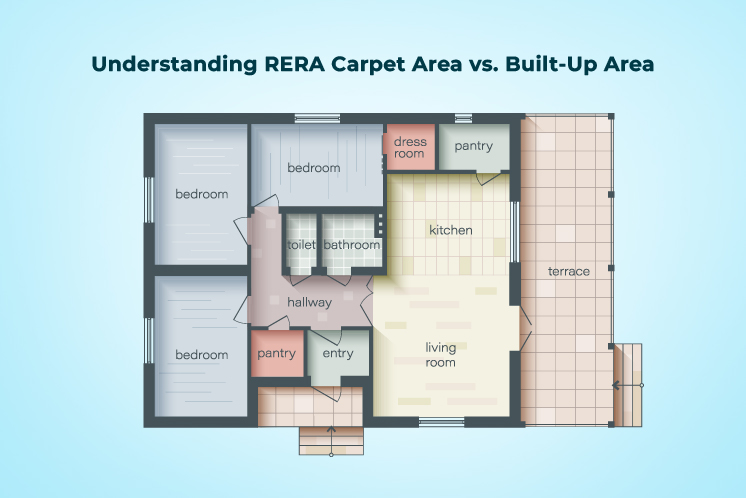
RERA carpet area refers to the actual usable floor area inside an apartment, excluding external walls, balconies, terraces, and common spaces. A built-up area includes the carpet area plus wall thickness and balconies, while the super built-up area also adds a proportionate share of common areas such as lobbies, lifts, and corridors.
Buying a property usually involves comparing floor plans, brochures, and pricing structures filled with technical real estate terms. Among the most commonly misunderstood concepts are RERA carpet area, built-up area, and super built-up area. Many buyers assume these measurements represent the same thing, only to later realize that the actual usable space inside the apartment is very different from what was advertised.
To improve transparency in the real estate sector, the Real Estate Regulatory Authority (RERA) standardized how developers define and disclose apartment sizes. Today, understanding the built-up area and carpet area difference has become momentous for assessing property value, comparing projects, and making informed purchase decisions.
The RERA carpet area is the actual usable floor area within the walls of an apartment. According to RERA guidelines, it includes the area covered by internal partition walls but excludes balconies, terraces, external walls, shafts, and common areas.
In simple terms, this is the space where residents can place furniture, walk around, and use it daily.
The RERA carpet area includes bedrooms, the living room, the kitchen, bathrooms, and internal partition walls.
It excludes external walls, balcony areas, terrace areas, common corridors, lift lobbies, and staircases.
For homebuyers evaluating new projects in Pimpri Chinchwad or larger residential developments, carpet area offers the clearest picture of actual livable space.
“Built-up area” refers to the carpet area plus the thickness of walls and additional attached spaces, such as balconies and utility areas. This number is always higher than the carpet area because it includes structural elements that are not fully usable.
Built-Up Area Formula:
Typically, the built-up area is around 10–20% larger than the carpet area, depending on the project layout and wall design.
Example:
If the RERA carpet area is 1,000 sq. ft.:
Then:
Understanding the built-up area formula assists buyers in comparing pricing more accurately while reviewing project brochures.
A super built-up area is the total saleable area of an apartment. It includes the built-up area plus a proportionate share of common amenities and shared spaces within the project. These common areas may include the lobby, elevators, clubhouse, staircases, corridors, and amenity zones.
Super Built Up Area Formula:
Developers usually apply a loading factor to calculate this figure.
Example:
Super built-up area = 1,500 sq. ft.
This explains why two apartments with similar super-built-up area figures may offer very different carpet areas.
Many buyers compare properties without fully understanding how these area measurements differ. Here is a simplified comparison:
| Area Type | Includes | Excludes | Best Used For |
| RERA Carpet Area | Usable internal space | Balconies, external walls | Comparing actual living space |
| Built-Up Area | Carpet area + walls + balconies | Common amenities | Understanding structural size |
| Super Built Up Area | Built-up area + shared amenities | Private-only space | Pricing and saleable area |
When comparing projects, buyers should prioritize the RERA carpet area because it provides the clearest understanding of actual living space.
The built-up area and plinth area are also different concepts.
The plinth area is commonly used in construction planning rather than residential sales comparisons.
The introduction of RERA created greater transparency in the real estate market.
Earlier, developers often promoted projects mainly using super built-up area figures, which sometimes made apartments appear larger than their actual usable size.
Today, the RERA carpet area helps buyers.
If you are looking at new commercial projects or residential developments in Pune, carpet area gives buyers a much clearer picture of what they are actually paying for.
Before finalizing a property, buyers should ask developers:
These questions help buyers avoid misunderstandings related to pricing and usable space.
Many buyers focus only on the super-built-up area mentioned in advertisements without checking the actual carpet area.
A lower super-built-up-area apartment with a better layout can often provide more usable living space than a larger apartment with excessive loading.
Understanding the difference between RERA carpet area, built-up area, and super built-up area is a must for making smarter property decisions. While a super-built-up area influences pricing, the carpet area states how much usable space a buyer actually receives.
As residential developments continue to expand across Pune, buyers reviewing projects from reputed developers should focus on transparency, proper layouts, and realistic space calculations. Pharande Spaces continue to contribute to the region’s growing residential market with pensively planned communities and modern developments.
The RERA carpet area is very close to the usable area because it represents the net usable internal apartment space, excluding balconies, terraces, and external walls.
Yes. Balcony and utility areas are generally included in the built-up area calculation along with wall thickness.
A loading factor between 25% and 35% is commonly considered reasonable, depending on the amenities and common infrastructure offered within the project.
You can verify the approved carpet area through the official project documents available on the MahaRERA website under the project registration details.
GST is generally calculated on the overall agreement value, which is often derived from the property’s saleable or super built-up area pricing.
Yes. Different projects may have different loading percentages, resulting in variations in carpet area despite having the same super built-up area.
The RERA carpet area is considered the most accurate benchmark for comparing property prices because it reflects the actual usable living space.
“Built-up area” refers to the covered apartment space, including walls and balconies. The plinth area measures the total covered floor area externally at the building level.
Banks may evaluate multiple measurements during valuation, but the RERA carpet area improves pricing transparency and property assessment accuracy.
The super built-up area is calculated using the formula: Super Built-Up Area = Built-Up Area + Proportionate Share of Common Areas. This includes lobbies, staircases, elevators, clubhouses, and shared amenities.
 By Admin